
The Chatbot Trap: Why “Adding AI” to Your Software Product Is a Bad Idea

I tried to update my postal address with my bank last week. They had replaced a perfectly functional one-page form with a "friendly" chatbot. It took ten minutes of typing and a bit of social engineering to convince the bot my postcode actually existed.
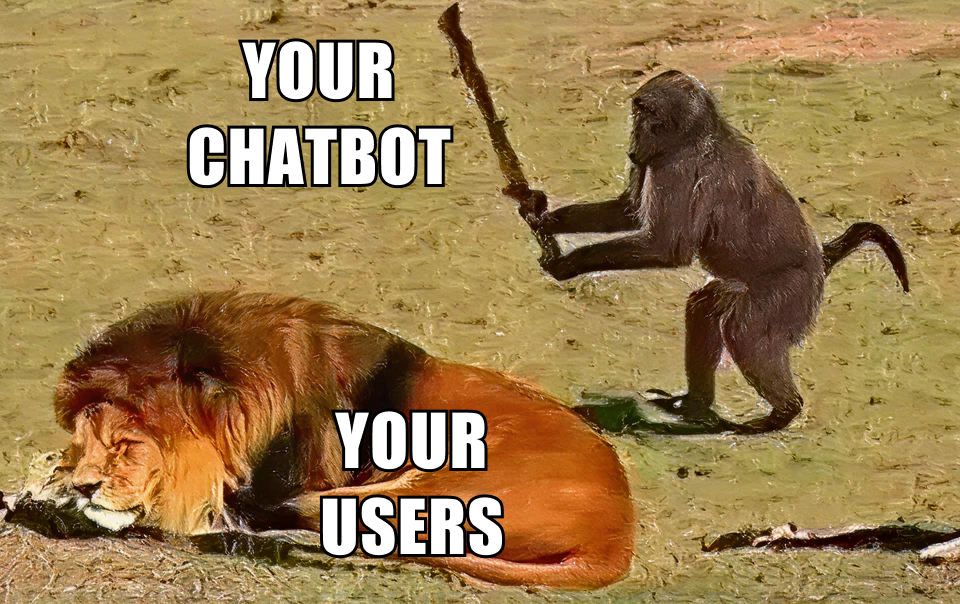
Most SaaS companies are doing the same thing. They are integrating AI chatbots like web designers used Flash intros in 1998. It looks modern. It feels like progress. In practice, it often just adds friction.
It's usually not a technical problem. It's a product thinking problem. It's the naive reaction of a Product Owner jumping on a train without checking where the tracks lead.
AI isn't a feature you add to your product. It is a new set of physics for product engineering.
It's not the time to write an epic on chatbot integration. It's a time to rethink your product vision. Before you start building "something with AI", ask your team five questions to understand what should change, what should stay, and what actually matters.
Who should read this?
1. Does our value come from the process or the result?
Most software exists to manage processes. Forms, steps, approvals, workflows. AI eats processes for breakfast. If your value is "the way we do things," you're a target. If your value is "the result we deliver," you're a partner.
2. What is the one thing our users hate doing that a machine can now do perfectly?
Don't automate the "friendly" conversation. Automate the friction. If the user has to talk to a bot to change an address, you've missed the point. If the bot sees the address change in their utility bill and asks "Should I update this for you?", you've created value.
3. What if the user never sees our UI again?
In the future, your users might be AI agents acting on behalf of humans. Has your product an interface for them? If your UI is the only way in, you are locking out the most efficient customers you'll ever have.
4. Where is your unique data moat?
If a generic AI can solve your user's problem using only public data, your product is a commodity. What valuable knowledge or proprietary data does your product own that an LLM can't find on the open internet?
5. What would a "Day Zero" competitor delete?
If a competitor started from scratch today with AI at the core, what parts of your product would they find hilarious? Delete those parts before they do.
Enjoyed this article? Get more like it in your inbox.
Subscribe to our newsletter.